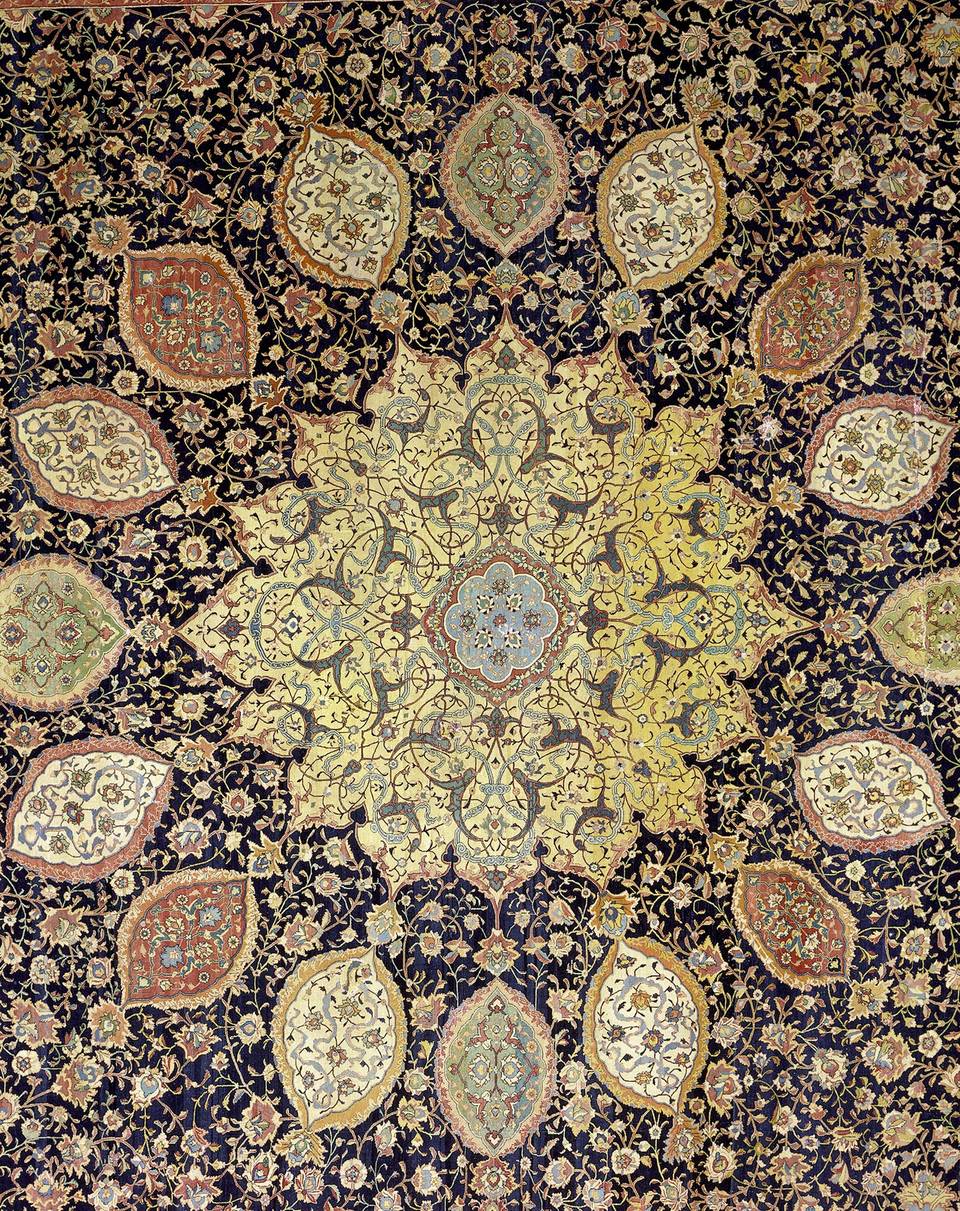
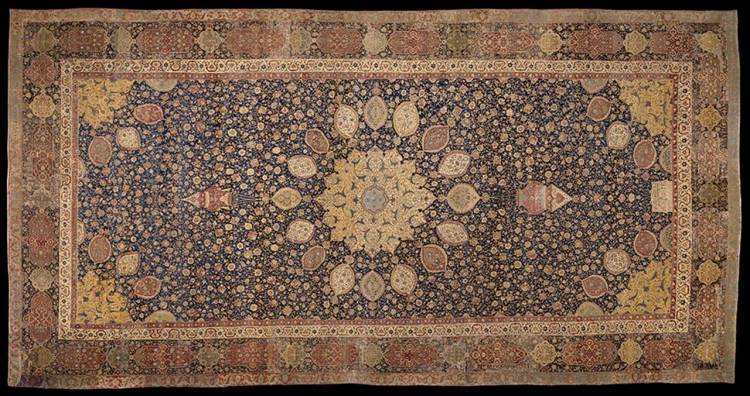
In a perfectly symmetric masterpiece carpet why are the carpet’s two lanterns asymmetric in shape, size and design?
‘ The lamps shown hanging from the centrepiece (medallion) are of different sizes. Some say that this was done to create a perspective effect.’ (V&A Museum)
Suggesting ‘If one stands at the bottom of the carpet the two lanterns would appear to be in the same size.’
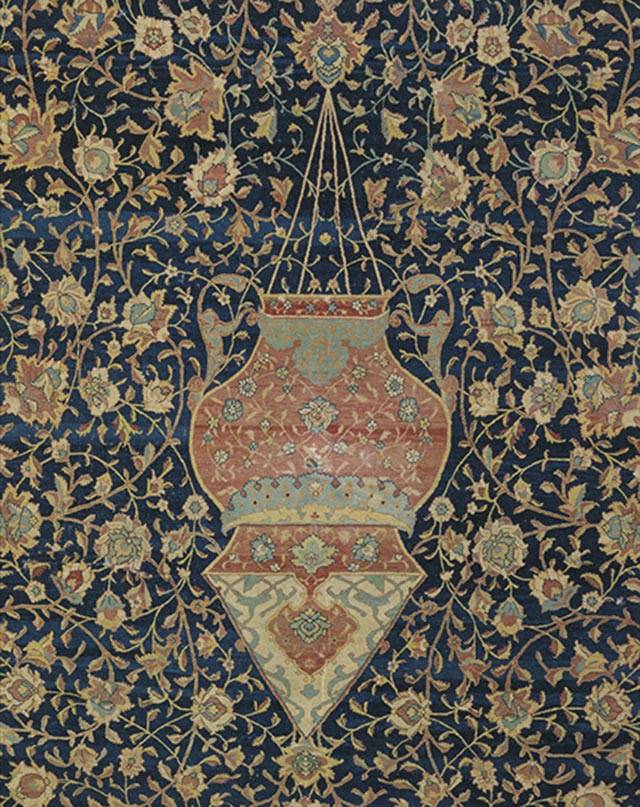
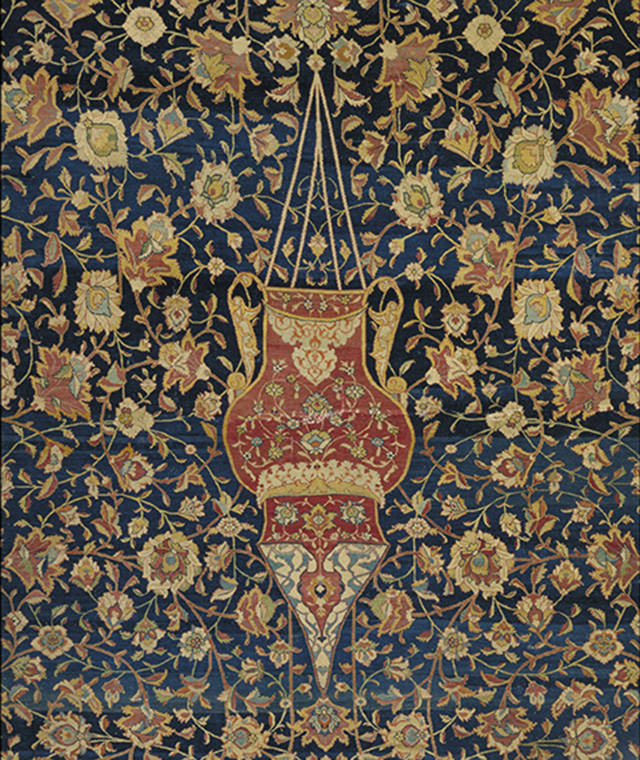
‘Perspective’ as suggested, might be one interpretation of why the lanterns are different in size.
But ‘perspective’ only explains the difference in size, not in form and shape. The question is why their designs are also completely different.
To better interpret the design of this masterpiece, it is important to remember that the Ardebil pair of carpets were commissioned for one of many halls of the shrine; ‘ ‘قندیل خانه’ (pronounced as Ghandil Khaneh) or The Lantern Hall.
The complex of Shaykh Saffi-Addin Ardebili in the city of Ardebil in north of Iran consists of different buildings, and the Safavid King, Shah Ismail commissioned the art for a special space within the shrine complex.
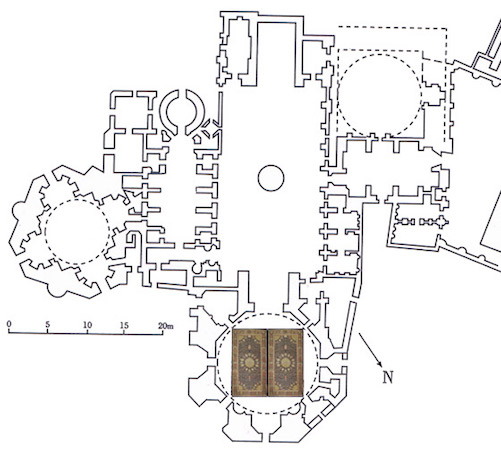
It is important to keep in mind is that Ghandil in Persian language (قندیل) is referred to hanging shapes or textures such as stalactite of a cave ceilings.
It also refers to hanging icelets.
The world’s largest water cave, Ali Sadr Cave, Hamedan, Iran

The specific hall of the shrine where the Ardebil Carpet was commissioned for was covered with hundreds of ghandils (قندیل) or lanterns’ designs in its entire space.
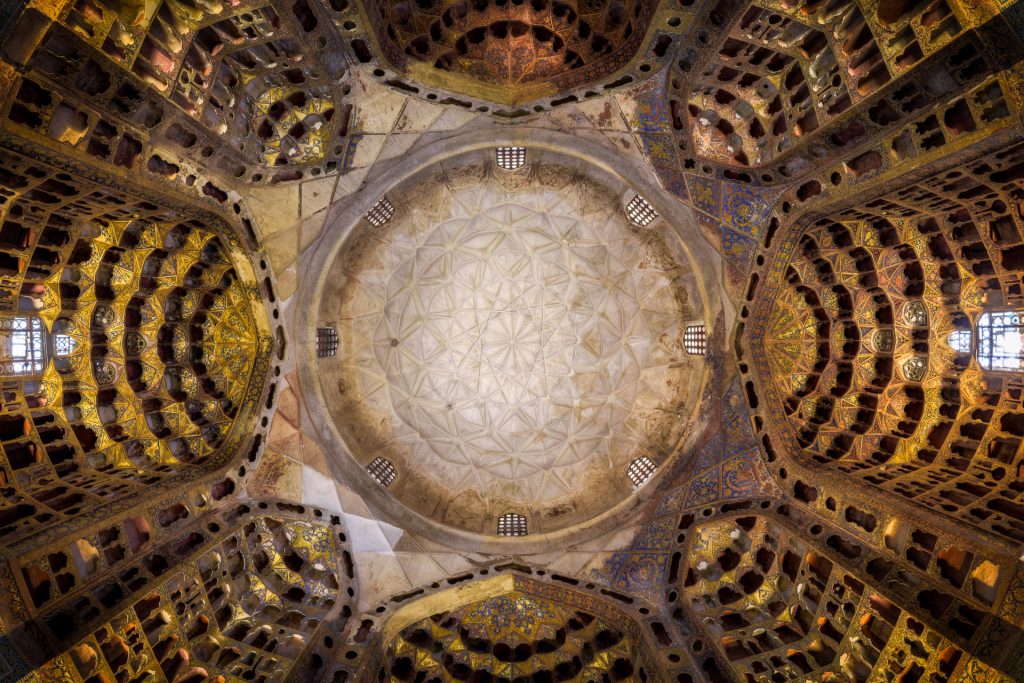
قندیل has always been a popular design in Persian art. It continued to be an inspirational design in the region given their unexpected shapes, lengths, forms, colours, and textures.
‘As you enter the shrine you are faced with a long prayer hall called Ghandil Kaneh or lantern house.
‘The decoration is brilliant gold paint with open rooms on the left side with stalactite roof decorations.’
A diary page of a tourist

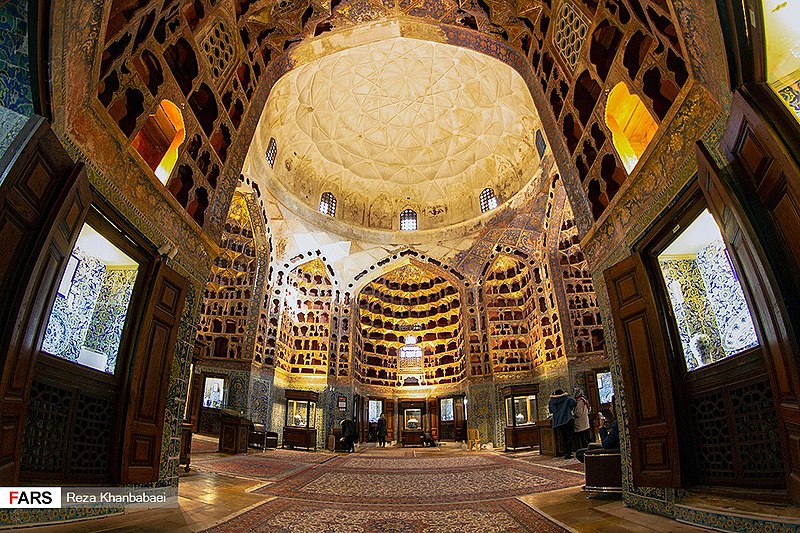
To synchronise with the art of the entire space, the master artist of the Ardebil Carpet cleverly incorporated the ghandil (قندیل) asymmetry into the perfect symmetry of the Carpet.
So, let’s face it;
Have you ever come across two ghandils (قندیل) looking exactly the same?
A bit of context explains the lanterns’ mystery.

The complex of Sheikh Safi al-Din in Ardabil is on the UNESCO World Heritage List.
4 August; the day of commemorating Shaykh Safi-Addin Ardebili on the Iranian Calendar (روز ۴ مرداد , روز بزرگداشت شیخ صفیالدین اردبیلی)
Share the story
The ‘Ardebil’ Carpet And The Lanterns’ Mystery
Tweet
Suggested reading materials and references:
Special thanks to Annette Ittig,Karen Polinger Foster, and V&A Museum for their research that contributed to the main body of this series adaptation. Sentences showing an asterisk (*) above may be traced to the provided research materials containing close to 70 Parsian and English academic references.
- The Hanging Gardens of Nineveh, Author(s): Karen Polinger Foster, Source: Iraq , 2004, Vol. 66, Nineveh. Papers of the 49th Rencontre Assyriologique, Internationale, Part One (2004), pp. 207-220
Published by: British Institute for the Study of Iraq - Victorian & Albert Museum archive
- Ziegler’s Sultanabad Carpet Enterprise, Author(s): Annette Ittig, Source: Iranian Studies , 1992, Vol. 25, No. 1/2,
 Persia; Past & Present