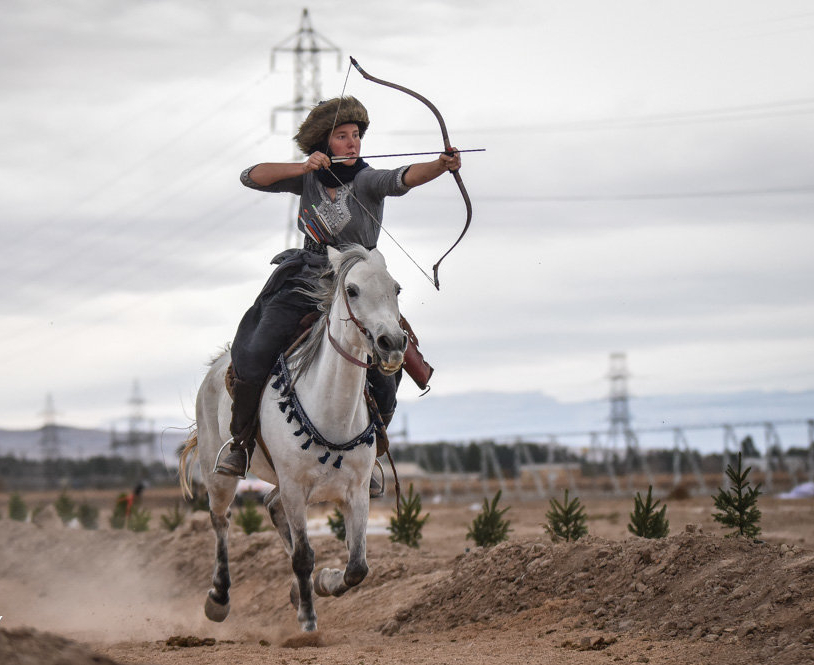
Parthians were known as skilled cavalrymen who were remarkably adept at aiming their bows both backwards and forwards at enemies.
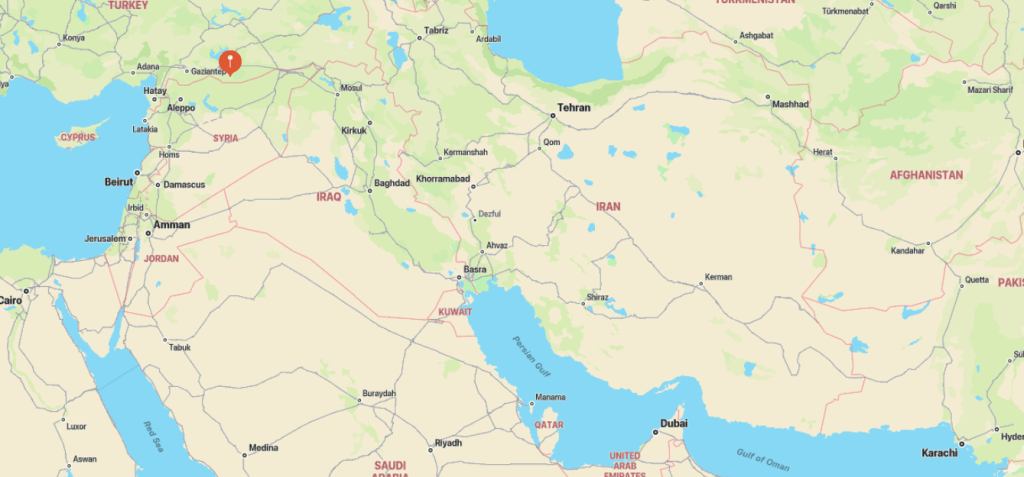
After their defeat from Alexander of Macedonia, Parthians – an Iranian tribe of the Caspian Sea – established the Iranian dynasty of Ashkanian/Parthian and ruled from 240 BC to 224 AD. At its height, it stretched from Anatolia to the Indus Valley and from the Caspian Sea to the Persian Gulf.
Often Parthian horsemen would feign retreat at full gallop and then quite suddenly turn and fire an arrow at the pursuing enemy.’
The Politics of Parthian Coinage in Media,
Published by: The University of Chicago Press on behalf of The American Schools of
Oriental Research, Sep 2005

The strategy was particularly put to good use in a battle that the Parthians defended The Romans in the year 53 BC near the town of Carrhae (currently Harran, Turkey).

Parthian shots bowl
Found in Pakistan/Afganistan border
460-479 AD (Sassanian empire)
Following the Parthian empire, Sassanian empire ruled Iran for another 5 centuries from early 3rd to mid-7th AD)
Repository: British Museum
‘King Hormizd II (هرمزد وم) or Hormizd III ( هرمز سوم) Hunting Lions’
Dish, Metalwork, silver gilt, 4.6 x 20.8 cm
Iran, 400-600 AD
Lion hunting was a traditional royal sport in many west Asian cultures; in art it was sometimes symbolic of a historic conquest. Here, details of the king’s and the horse’s equipment are in the style of the 5th-century Hormizd III (هرمز) of Iran. The crown here, however, resembles that of Hormizd II (هرمز) 303-309 AD, so this plate may be commemorative.
Repository: The Cleveland Museum of Art, USA
Battle of Carrhae; 55BCE
The Battle of Carrhae, between the Parthian Empire and the Roman Republic, under the legendary general Crassus, resulted in an overwhelming victory for the Parthians.
How did it start?
Crassus attacked the Parthian heartland. He arrived in Syria with aid of Hellenic settlements in Syria and the support of the King of Armenia.
The Parthian King Orodes II (اورد دوم), in response, sent his cavalry units-only half of his army- against the Romans who vastly outnumbered them.
The Parthian horse archers shot repeated volleys into the dense formations of legionnaires and, when the Romans attempted to charge the horse archers, the Parthians followed their infamous custom of retreating, turning suddenly to shoot backward arrows at the enemy and abruptly turning back to trample the stricken soldiers.
Crassus’s son head on a pike was for all to see.
This became arguably the worst defeat ever suffered by the Romans.

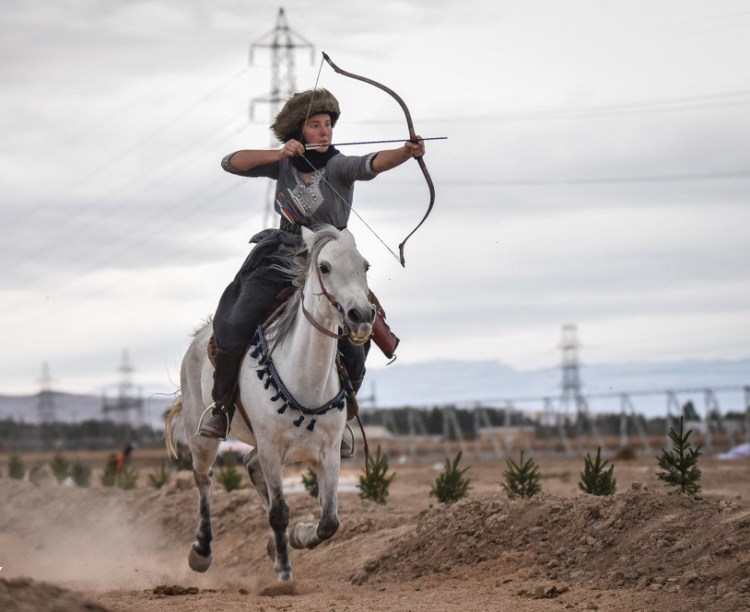
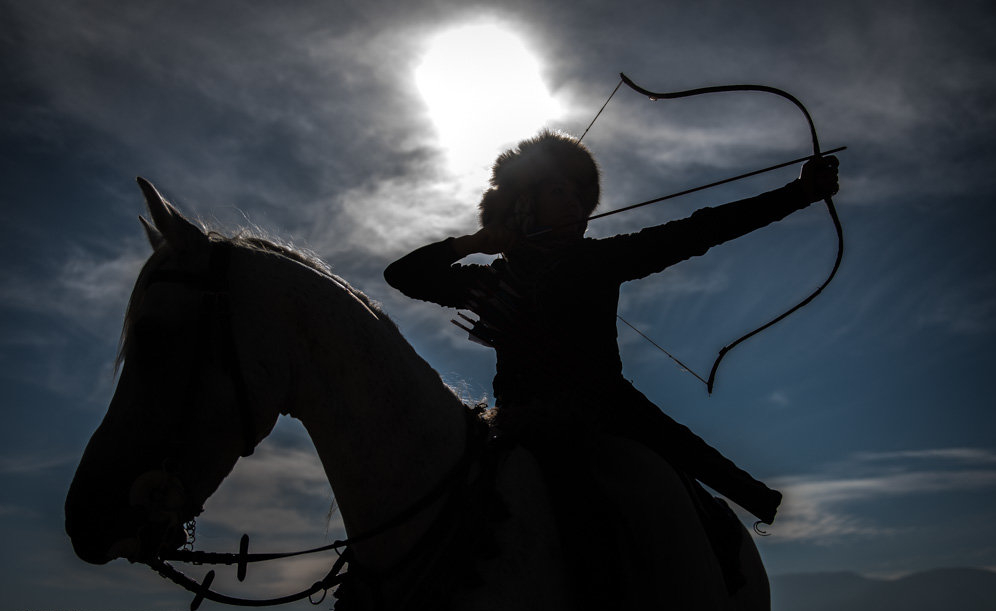
Paintings of Parthian shot
Repository: People’s Palace, Tehran, Iran

2020 Shiraz Competition, Iran (Photo: A Berenjkar)

‘Two Mounted Warriors‘
Painting (ink, watercolor, opaque watercolor, and gold on paper) (9.5 cm)x (8. 1 cm), 16th century, Iran
Repository: The Metropolitan Museum of Art

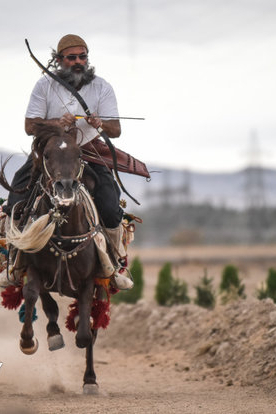
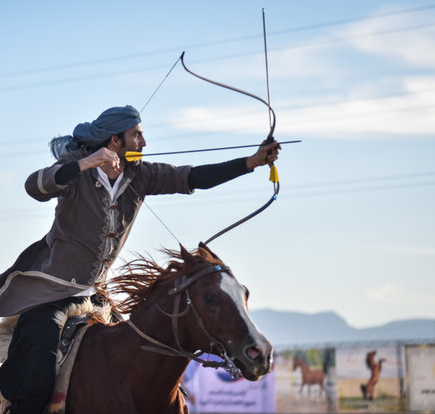

(Photo: A Berenjkar)

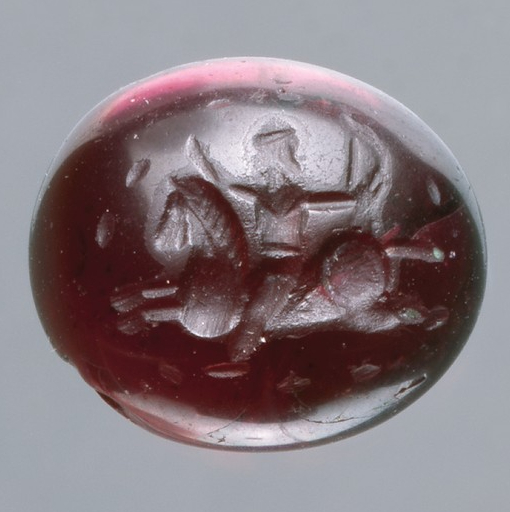
‘Intaglio of an Archer’
Sasanian Empire (3rd-7th century AD)
Work Type: intaglio
Material: Carnelian (7 x 1.2 x 1 cm)
Iran, 4th Century AD
Repository: Michael C. Carlos Museum, Emory University
References and selected readings:
The Politics of Parthian Coinage in Media, The University of Chicago Press on behalf of The American Schools of Oriental Research, Sep 2005
The Digital Archiveof Brief Notes & Iran Review (DABIR)
ISSN: 2470-4040
www.dabirjournal.org
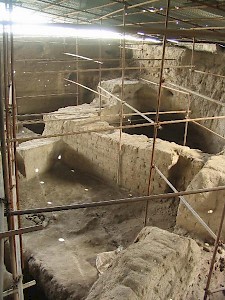
Capital of Parthian (Qumis, Damghan, 100, city wth 100 gates),قومس، دامغان، 100دروازه
Parthian, also known as the Arsacid Empire (امپراتوری اشکانی)
 Persia; Past & Present