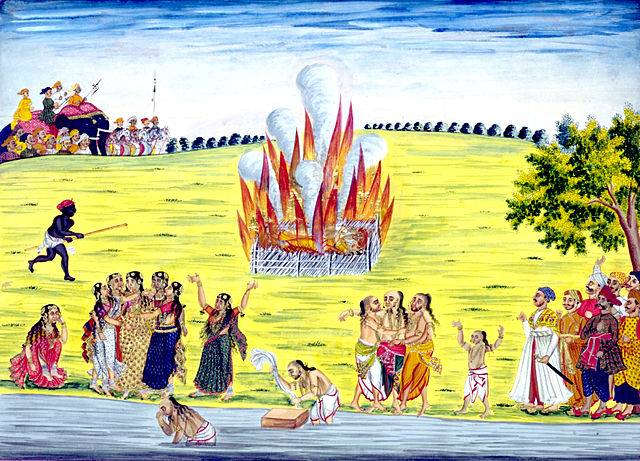
(Photo: Practice of widow-burning or sati/suttee -painted circa 1800, source: Wikimedia) From an Islamic viewpoint, Roy used the unitarian views of Persian Sufism as a vehicle to preach his reformative ideas to combat polytheism and criticizing crude Indian rituals such as voluntary or later forced wife-burning at husband funerals. (sati).* Roy, Rabindranath Tagore’s father; sufismContinue reading “Persian sufism and the Indian reform; Rammouhan Roy (1772-1833)”
Category Archives: Ramouham Roy
Imam Ali’s followers in a princely family; Robindranath Tagore

Dr Leonard Lewisohn notes that ‘although Persian Sufi ideas constitute a significant feature of Tagore’s philosophical and mystical thought, these aspects are generally disregarded by critics of his writings*. With no formal education, Tagore received the 1913 literary Nobel Prize for his spiritual poems. In this series, we take a look at his upbringing andContinue reading “Imam Ali’s followers in a princely family; Robindranath Tagore”
 Persia; Past & Present